
Australian Visitor Visa: What Should I Do If My Visa Is Refused?
An Australian Visitor visa refusal does not necessarily mean that you cannot apply again. The important question is understanding why the application was refused and whether the concerns identified by the Department of Home Affairs can be properly addressed in a new application.

Australian Visitor Visa: Can I Take My Domestic Helper on Holiday to Australia?
Can you take your domestic helper with you when you travel to Australia? In many cases, the answer is yes, but obtaining an Australian Visitor Visa for a domestic helper is not automatic. The circumstances of the proposed visit, the employment relationship, the length of the stay and the evidence provided can all be important. This article looks at when these applications can work, why they may be refused, and why the situation is very different when a family is permanently relocating to Australia.
Can I Apply for an Australian Partner Visa If My Partner Is Still Legally Married to Someone Else?
Being legally married to someone else does not necessarily mean that a person cannot establish a genuine relationship with a new partner for Australian migration purposes.
The circumstances surrounding the previous relationship need to be understood and, where relevant, supported by evidence. At the same time, the new relationship must satisfy the applicable requirements and be supported by evidence demonstrating that it is genuine and continuing.
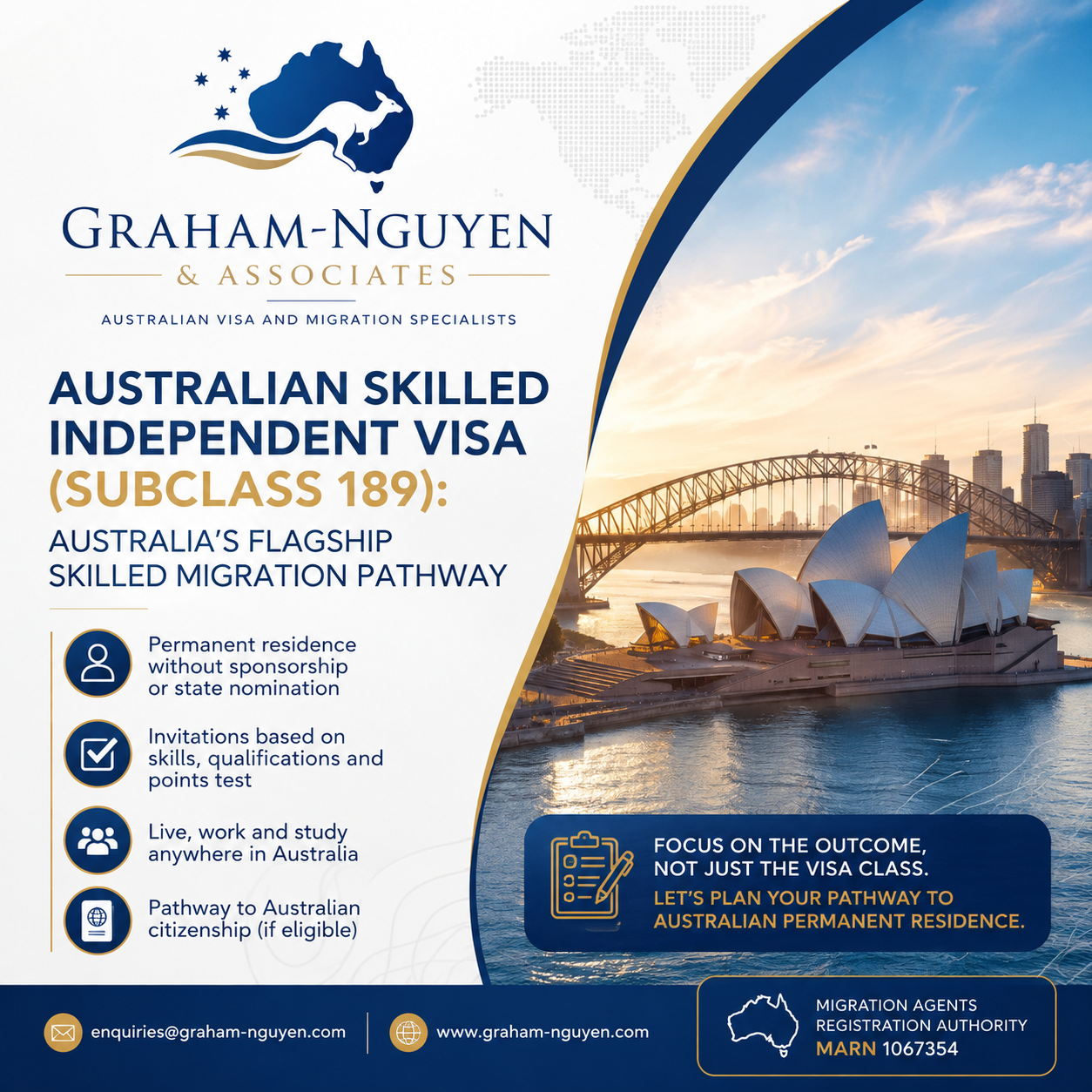
Australian Skilled Independent Visa (Subclass 189): Australia's Flagship Skilled Migration Pathway
The Skilled Independent Visa (Subclass 189) is Australia's flagship skilled migration visa, but is it always the best pathway to permanent residence? This guide explains how the Subclass 189 visa works, eligibility requirements, common misconceptions, and why a strategic approach to skilled migration may improve your chances of success.
Why Evidence Matters in Australian Visa Applications
Australian visa applications are not decided by checklists—they are decided by evidence. Learn why strong, relevant and persuasive evidence is the cornerstone of every successful visa application and how it can influence the outcome of your case.
Australian Visa Character Requirements: Understanding the Character Test
Australia's visa character requirements are more complex than many applicants realise. A criminal record does not automatically prevent visa approval, but understanding the character test under the Migration Act 1958 is essential. This guide explains how character assessments work, common misconceptions, and what applicants should know before lodging an Australian visa application.
Who Can Be Included in an Australian Visa Application? Understanding Dependents and Family Members
Who can you include in an Australian visa application? This comprehensive guide explains Australian visa dependents, secondary applicants, spouses, partners and children, including who qualifies, when family members can be added, what happens if your family circumstances change, and common misconceptions about Australian migration law.

Australian Citizenship: Who Is Eligible and How Do You Become an Australian Citizen?
Australian citizenship is the final step in many migration journeys. Learn about Citizenship by Birth, Citizenship by Descent, and Citizenship by Conferral, including residency requirements, eligibility criteria, and a real-life case study demonstrating that it is never too late to explore your eligibility for Australian citizenship
Resident Return Visas (RRVs): Why Every Australian Permanent Resident Should Understand Them
Many Australian permanent residents mistakenly believe their permanent residency expires after five years. In reality, it is the travel facility that expires. Learn how Resident Return Visas (RRVs) work, when you need one, and why maintaining a valid RRV can save you significant stress if unexpected overseas travel arises.

Australian Partner Visas: Understanding Spouse and De Facto Migration to Australia
Thinking about applying for an Australian Partner visa? Whether you're married, in a de facto relationship, or part of a same-sex couple, understanding how the visa works is essential. This article explains the two-stage process, genuine relationship requirements, common misconceptions, and why every application should be tailored to the couple's unique circumstances.